
Episcopal Press and News
Allin Presses Mideast Needs
Episcopal News Service. August 19, 1982 [82184]
NEW YORK (DPS, Aug. 19) -- With an end to the "appalling and senseless destruction in Lebanon" apparently near, Presiding Bishop John M. Allin has called on all parties in the Mideast crisis to work toward the further step of mutual recognition.
In a mid-August statement, the spiritual head of the 2.8 million member Episcopal Church noted "The General Convention of the Episcopal Church in 1979 affirmed Israel's need to exist as a free state with secure borders, urged continued negotiations leading to an overall settlement and peaceful resolution of the problems in the Middle East, and expressed support for the opportunity to establish a free, independent Palestinian State which recognizes the State of Israel. The next step, after the destruction of life and property in Lebanon is stopped, is a mutual recognition of the legitimacy of both an Israeli and a Palestinian State. Peace can only come when both are secure in such a recognition."
Allin coupled his plea for stability with a call for quick response to the needs of the wounded, sick and homeless created by the intense combat in the western, Moslem, sections of Beirut.
Most newsmen and relief specialists have agreed that the brunt of casualties were borne by civilian, non-combatants rather than by the trained guerillas who were the ostensible targets of the shells and bombs.
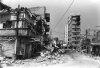
After two weeks in West Beirut on assignment for the Oxfam-America relief organization, writer Dan Connell reported on conditions to officers of the Episcopal Church's Presiding Bishop's Fund for World Relief. "As the bombing and shelling has pounded the southern reaches of the city and steadily inched northward into the densely packed downtown area, the civilians have crowded together into smaller and smaller spaces. Casualties have correspondingly increased at a geometric rate, with a single aerial bomb sometimes claiming up to 300 dead and injured as whole apartment buildings have collapsed into heaps of twisted steel and broken concrete."
Connell pointed out that: "medical and relief personnel working in West Beirut have lately become more concerned at the long term threat of epidemic and disease as the combined effect of overcrowding, malnutrition, polluted water and declining personal hygiene has raised the specter of waves of cholera, typhoid, polio and even plague. This problem will not ease soon, regardless of the political outcome of negotiations between PLO and Israeli leader, say many doctors and international aid officials.
"'Turning on the water is of no help if we have not fuel to run the pumps. Damage to the pipes is producing pollution in any event, and we are seeing many cases of diarrhea and other illnesses in small children,' said John de Salis, head of the International Committee of the Red Cross delegation in West Beirut."
"'The public health problem here is a time bomb waiting to explode, and there is little we could do about it once it happened,'' added an English doctor who asked not to be identified."
"But the long term effects of the war," Connell concluded," will be with Beirut citizens for a generation to come. Families have been broken up, thousands permanently handicapped, tens of thousands rendered homeless and many more left without jobs."
The Presiding Bishop's Fund -- through its special Lebanon appeal -- has contributed $5,000 to Oxfam-America's work in Lebanon and has also sent $10,000 to the Anglican diocese of Jerusalem and $20,000 to Church World Service to provide housing, medication, clothing and food to the refugees and to help rehabilitation programs in the war-torn area.
 |
![[thumbnail: An elderly woman rests in...]](/ENS/photographs/thumbnails/82184_2_thb.jpg) |